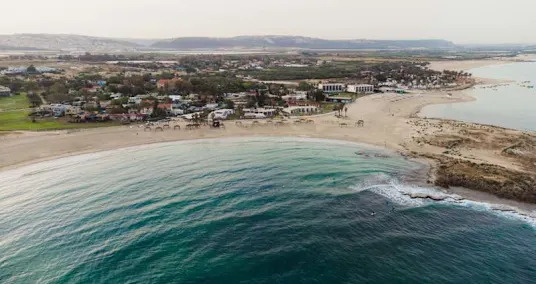
The discovery was made in an ancient shipwreck in the Dor Lagoon near the Carmel Coast, where archaeologists recovered nine pieces of unprocessed iron known as “blooms.”
Researchers from the University of Haifa said Wednesday that an underwater excavation off Israel’s northern Mediterranean coast uncovered what they described as the earliest known cargo of raw iron transported by ship, dating back around 2,600 years, Xinhua reported.
The discovery was made in an ancient shipwreck in the Dor Lagoon near the Carmel Coast, where archaeologists recovered nine pieces of unprocessed iron known as “blooms.” According to the university, the find provides direct evidence of how iron was transported in its earliest commercial stages.
The material was preserved in its original form, having solidified directly in a smelting furnace without undergoing forging or further refinement. Researchers said this distinguishes the cargo from later iron artifacts that typically show signs of shaping or tool-making.
Unlike copper and bronze, which could be melted into liquid form in ancient production processes, iron was heated with charcoal to produce a solid, porous mass. That mass was generally hammered to remove impurities and create denser material suitable for tools and implements.
The recovered blooms showed no indication of that secondary processing stage, suggesting they were transported immediately after production.

Earliest iron shipment discovered in ancient Mediterranean wreck
To determine the age and condition of the cargo, researchers conducted microscopic and chemical analyses.
Radiocarbon dating was also carried out on charred wood embedded in one of the pieces, helping confirm the timeline of the shipment. The findings were published in the journal Heritage Science.
Researchers said the cargo indicates that iron was being moved in raw form from production sites to other locations for further processing, pointing to a level of specialization in ancient manufacturing and trade networks in the Mediterranean.
The University of Haifa said the discovery provides new insight into early iron production and distribution practices in the region.
LATEST POSTS
- 1
 How to see the Ursids, the final meteor shower of 2025
 - 2The race to mine the moon is on – and it urgently needs some clear international rules
- 3Launch pad damaged as Russian rocket blasts off for space station, agency says
- 4Smuggler who called migrants 'chickens' jailed
- 5The most effective method to Plan an Incineration Administration: A Bit by bit Guide.




- Bolsonaro says hallucinatory effects of meds made him tamper with ankle tag
- Flourishing in a Remote Workplace: Individual Techniques
- Big majority in Germany call Berlin's efforts on gas prices too weak
- Hamas Navy head, engineer of Khan Yunis tunnel network killed in Gaza, IDF confirms
- 'We were genuinely astonished': This moss survived 9 months outside the International Space Station and could still grow on Earth
- 5 Food varieties to Remember for Your Eating regimen for Ideal Wellbeing
- FDA adds strongest warning to Sarepta gene therapy linked to 2 patient deaths
- Extraordinary Snowboarding Objections All over the Planet
- Grasping Various Kinds of Local misdemeanors